
Can our bodies hold the secret to managing daily stress? The link between our gut and brain is key to our well-being. Studies reveal the gut-brain axis is vital for reducing stress and boosting natural resilience.
Learning about this complex bond can help us deal with stress better. By uncovering the microbiome’s secrets, we can find new ways to improve our mental health and life quality.
Key Takeaways
- The gut-brain connection is crucial for managing stress.
- A healthy microbiome is essential for natural resilience.
- Understanding the gut-brain axis can lead to new stress reduction strategies.
- The microbiome plays a significant role in mental health.
- Enhancing gut health can improve overall well-being.
Understanding the Gut-Brain Axis
The gut and brain are connected in a two-way street. This network, called the gut-brain axis, is key to our health. It’s especially important for stress reduction and gut health.
What is the Gut-Brain Axis?
The gut-brain axis is a complex system. It links the brain to the gut through nerves, hormones, and immune signals. This connection is vital for our health.
Key parts of this axis include:
- The vagus nerve, which connects the gut and brain.
- Neurotransmitters in the gut that affect mood and thinking.
- The gut microbiome, which shapes the gut-brain axis.
Importance of Gut Health
A healthy gut is crucial for a balanced gut-brain axis. A good gut microbiome helps:
- Make vitamins.
- Control the immune system.
- Impact mood and thinking through neurotransmitters.
Keeping gut health in check is vital for well-being. It helps us deal with stress better.
How the Brain Influences the Gut
The brain has a big impact on the gut. Stress and emotions can change how the gut works. This can cause stomach problems, showing the need for a good gut-brain connection.
Ways to improve this connection include:
- Mindfulness and stress management.
- Eating right to support the gut.
- Using probiotics and prebiotics for the gut microbiome.
Understanding and supporting the gut-brain axis helps manage stress. It also boosts overall health.
The Role of the Microbiome in Stress Reduction
The human microbiome is a complex ecosystem that greatly affects our stress levels. It’s made up of trillions of microorganisms living in and on our bodies. These microbes play a key role in our health and well-being.
What is the Microbiome?
The microbiome is the sum of all microbes living in and around us. These tiny life forms help with digestion, immune function, and even brain function. Having a balanced microbiome is vital for staying healthy and resilient against stress.
Research shows that our microbiome makes substances that affect our mood and thinking. For example, some microbes can make serotonin, which helps control mood, appetite, and sleep.
How Microbes Communicate with the Brain
Microbes and the brain talk to each other in a two-way conversation. This involves many signaling pathways. Microbes can make and change neurotransmitters, hormones, and other molecules that affect our brain and behavior.
This complex interaction happens through the gut-brain axis. It’s a network that lets the gut and brain share information. By understanding how microbes talk to the brain, we can see how they help with stress management and mental health.
Studies have found that an unbalanced microbiome, or dysbiosis, can make us more stressed and anxious. But a balanced microbiome can give us microbiome resilience benefits. This helps us deal better with stress.
Mechanisms of Stress Reduction
The gut microbiome and stress reduction are linked through several key processes. Learning about these can help us find natural ways to reduce stress and boost gut health.
Neurotransmitter Production
The gut microbiome helps make neurotransmitters like serotonin and dopamine. These are important for mood and stress control. Certain gut microbes can affect how much of these neurotransmitters are made, impacting our stress and mental health.
Inflammation and Stress Response
The gut microbiome also affects stress by controlling inflammation. The gut and brain are connected, and an imbalance in gut microbes can cause more inflammation. This can make stress worse. Keeping a healthy balance of gut microbes can help reduce stress and improve resilience.
Understanding these mechanisms opens up new ways to find stress relief and enhance our well-being.
The Impact of Diet on Gut Health
Eating well is key to a healthy gut microbiome. This is important for enhancing natural resilience through gut health. What we eat affects our gut’s health and how we handle stress.
To nourish our gut, we need to eat foods that help good microbes grow. Foods high in probiotics and prebiotic fibers are especially good for our gut.
Probiotic Foods to Incorporate
Probiotics are good bacteria that help our health. Adding probiotic foods to our diet keeps our gut balanced. Here are some examples:
- Yogurt (especially those with live and active cultures)
- Kefir, a fermented milk drink
- Sauerkraut, a fermented cabbage dish
- Kimchi, a traditional Korean fermented vegetable dish
- Miso, a fermented soybean paste
Prebiotic Fibers for Gut Nourishment
Prebiotics are fibers that feed good microbes in our gut. They help our gut microbiome grow strong. Foods rich in prebiotics include:
- Asparagus
- Garlic
- Onions
- Whole wheat bread
- Bananas
Eating probiotic and prebiotic foods helps with gut health stress relief and overall health. A diet full of whole foods is vital for a healthy gut and stress resilience.
Effects of Gut Microbiota on Mood
Research shows that our gut microbiota greatly affects our mood and mental health. The gut-brain axis is a network that lets our gut and brain talk to each other. This communication is key to our emotional state.
Our gut health is tied to how we feel emotionally. When our gut microbiome is out of balance, it can lead to mental health issues like anxiety and depression.
Connection Between Gut Health and Anxiety
There’s a strong link between gut health and anxiety. Studies show people with anxiety often have different gut bacteria. Probiotics and prebiotics can help by changing our gut microbiome for the better.
Our gut microbiota also affects neurotransmitters like serotonin and dopamine. These chemicals help control our mood. If they’re off balance, we might feel sad or anxious.
Influence of Microbes on Hormones
Our gut microbiota also affects hormone production, which impacts our mood and stress levels. Cortisol, the stress hormone, is influenced by our gut microbiome.
Microbes in our gut can change hormone levels, affecting our mood and well-being. Learning about this connection could lead to new ways to manage stress and mood disorders.
Stress and Immune Response
The connection between stress and our immune system is complex. It’s influenced by the gut microbiome. When we’re stressed, our immune system kicks in, and the gut microbiome helps manage this.
Gut Microbiome’s Role in Immunity
The gut microbiome is key for a strong immune system. It makes neurotransmitters and hormones that can boost or calm the immune system. For example, it produces short-chain fatty acids, which fight inflammation and keep the gut healthy.
Having a balanced gut microbiome is crucial for a good immune system. Studies show that an imbalance, or dysbiosis, can weaken the immune system and make us more prone to infections.
- The gut microbiome shapes the growth and function of immune cells.
- It makes substances that can change how our immune system reacts.
- A healthy gut microbiome is important for making antibodies.
Chronic Stress and Gut Dysbiosis
Long-term stress can harm the gut microbiome, causing dysbiosis. Chronic stress activates the body’s stress response, releasing hormones like cortisol. These hormones can change the gut microbiome, reducing good microbes and increasing harmful ones.
Gut dysbiosis can make stress worse, creating a cycle. It’s important to manage stress well to avoid gut dysbiosis and keep the immune system strong. Ways to reduce stress include mindfulness, exercise, and eating a diet full of fiber and nutrients.
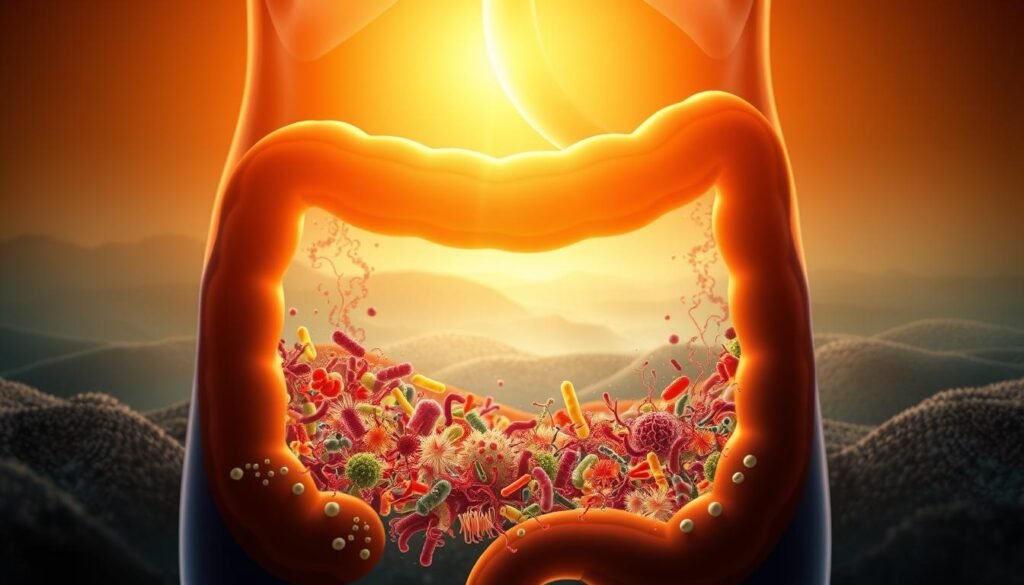
To manage stress in the gut microbiome, we need a variety of approaches. This includes changing our diet, managing stress, and possibly using probiotics or prebiotics. By doing these things, we can keep our gut microbiome balanced and support our immune system.
Strategies for Enhancing Gut Health
Improving gut health can help us manage stress better. By taking a holistic approach, we can boost our gut microbiome. This leads to better health and resilience overall.
Choosing the Right Supplements
It’s crucial to pick supplements backed by science. Probiotics are good bacteria and yeast that help our gut. They can fix the balance of our gut microbiome, especially after antibiotics or other issues.
Look for Lactobacillus and Bifidobacterium in probiotic supplements. Choose products with many strains and a high CFU count.
| Probiotic Strain | Benefits |
|---|---|
| Lactobacillus | Supports digestive health and immune function |
| Bifidobacterium | Enhances gut barrier function and immune system |
Lifestyle Changes for Better Resilience
Lifestyle changes are key to better gut health. Eating a balanced diet with fiber, fruits, and veggies helps our gut. Regular exercise also boosts gut health by improving movement and reducing inflammation.
Stress management, like meditation and deep breathing, helps our gut. Getting enough sleep is also vital, as poor sleep can upset our gut’s balance.
By making these changes, we can improve our gut health. This leads to better stress resilience and overall well-being.
Research Behind the Gut-Brain Connection
Research is finding new ways to help with stress relief through the gut-brain connection. This connection is complex, with the gut and brain talking to each other in a two-way street. This talk affects our health and happiness.
Recent Studies on Microbiome and Stress
Recent studies have made big strides in understanding how our gut affects stress. They found that some microbes can make our bodies better at handling stress. This is known as microbiome resilience benefits.
A study in a top scientific journal showed that people with diverse gut microbes feel less stressed and anxious. This is because their gut microbes make important chemicals and neurotransmitters.
Key Findings in Psychobiotics Research
Psychobiotics research is showing great promise. It looks at how certain microbes can help our mental health. Key findings show that specific probiotics can improve mood and reduce anxiety and depression. This helps with gut health stress relief.
“The field of psychobiotics is rapidly evolving, with new evidence suggesting that targeted microbial interventions could revolutionize the treatment of stress-related disorders.”
More research is needed to fully grasp the power of psychobiotics. We need to find the best strains for treating stress-related issues.
The Link Between Physical Activity and Gut Health
Regular exercise is a natural way to reduce stress and boost gut health. The link between exercise and gut health is complex. It involves many mechanisms that help us feel better overall. As we learn more, it’s clear that exercise is key to a healthy gut.

Exercise’s Effect on the Microbiome
Exercise changes the mix of microbes in our gut. Studies show it makes our gut microbiota more diverse. This diversity is vital for a strong immune system and helps manage stress through the gut-brain axis.
“Exercise is a powerful tool for shaping the gut microbiome,” notes a recent study. “Regular physical activity can lead to an increase in beneficial microbes, contributing to improved gut health.”
Stress Relief Through Regular Activity
Regular exercise is good for our gut microbiome and helps us relax. It reduces anxiety and depression by releasing endorphins, or “feel-good” hormones. This stress relief is linked to a healthy gut microbiome, as it helps produce and regulate neurotransmitters.
- Reduces stress and anxiety
- Improves mood through endorphin release
- Enhances gut microbiota diversity
Adding regular exercise to our lives helps manage stress and supports a healthy gut-brain connection. As we delve deeper into the gut-brain axis, exercise’s role becomes more clear.
Nurturing a Balanced Microbiome
Keeping our microbiome in balance is key for feeling good and handling stress. A healthy gut microbiome boosts our resilience, making us better at dealing with stress. We can achieve this balance by choosing the right foods and living a healthy lifestyle.
Foods to Avoid for Gut Health
Some foods can upset our gut’s balance. It’s important to cut down or avoid these to keep our gut healthy. Here are some foods to limit:
- Processed Foods: These are full of preservatives and lack fiber, harming our gut bacteria.
- Sugary Drinks and Foods: Too much sugar can upset the balance of our gut’s bacteria.
- Foods High in Saturated Fats: Eating too much saturated fat can harm the variety of gut microbes.
Importance of Hydration
Drinking enough water is crucial for a healthy gut. Water helps digest food and absorb nutrients. It also keeps us regular by softening stool and encouraging bowel movements. Staying hydrated is essential for gut health.
Tips for Staying Hydrated:
- Drink at least eight glasses of water a day.
- Add hydrating foods like cucumbers and watermelon to your meals.
- Stay away from caffeinated and sugary drinks that can dehydrate you.
Integrating Mindfulness and Gut Health
The connection between the gut and brain is becoming clearer. Mindfulness, like meditation and deep breathing, helps the gut. It also lowers stress and boosts well-being.
Stress Management Techniques
Managing stress is key for a healthy gut. Mindfulness, yoga, and muscle relaxation help. These practices can make your gut healthier and help you handle stress better.
- Mindfulness meditation: Regular practice can reduce stress and promote a balanced gut microbiome.
- Yoga: Combines physical movement with deep breathing techniques to reduce stress and improve gut health.
- Progressive muscle relaxation: Helps reduce physical tension and promote relaxation, supporting gut health.
The gut-brain axis plays a significant role in stress relief. Mindfulness can strengthen this connection. By lowering stress, you help your gut microbiota, improving your health.
The Role of Meditation on Gut Health
Meditation is good for the gut microbiome. Studies show it boosts diversity and reduces inflammation. This can lead to better mental health and stress resilience.
| Meditation Practice | Impact on Gut Health |
|---|---|
| Regular Mindfulness Meditation | Increased diversity of gut microbiota |
| Focused Attention Meditation | Reduced inflammation |
| Loving-Kindness Meditation | Enhanced gut-brain communication |
Meditation can be a powerful tool for supporting gut health. Adding meditation to your day can balance your microbiome and improve your well-being.
By adding mindfulness to your life, you help your gut and stress levels. This approach to health can lead to better mental and physical health. It can make your life better overall.
The Future of Gut-Brain Axis Research
Research on the gut-brain axis is growing, opening new ways to manage stress and build resilience. The connection between our gut and brain is being studied more closely. This is leading to exciting new treatments.
Emerging Therapies for Stress Reduction
Studies show that psychobiotics could help reduce stress and anxiety. These live microbes offer mental health benefits when taken in the right amounts. This is a big step forward in managing gut health for stress.
Potential for Personalized Microbiome Treatments
The future looks bright for personalized microbiome treatments. By looking at each person’s gut microbiome, doctors can create custom plans. This approach could greatly improve our overall health and stress management.
FAQ
What is the gut-brain axis, and how does it relate to stress reduction?
How does the microbiome influence stress and anxiety?
What are some ways to support gut health and reduce stress?
Can probiotics and prebiotics help alleviate stress and anxiety?
How does diet impact the gut-brain axis and stress reduction?
What is the connection between gut health and mood disorders?
Can lifestyle changes improve gut health and reduce stress?
Are there any emerging therapies for stress reduction targeting the gut-brain axis?
How does physical activity affect the gut microbiome and stress relief?
What role does hydration play in maintaining a healthy gut microbiome?
Related Posts
Phages in the Gut: A New Key to Preventing Type 1 Diabetes in Children
Can a balance of microorganisms in the body prevent a…

Unveil the Latest Insights on Natural Health
For over 150 years, we've debated nature versus nurture in…

Cold Plunge Therapy for Wellness: Benefits, Risks & How to Get Started
Can dipping in icy water really make you feel better?…