Can understanding the gut microbiome hold the key to unlocking new natural health trends?
Recent advancements in microbiome analysis have changed how we see the gut microbiome and health. As we look ahead to 2025, AI technologies are making a big difference. They help researchers understand complex data and find new patterns.
AI’s impact on gut health research is huge. It lets us see how the microbiome affects our health in new ways. This is leading to new ideas in natural health trends.
Key Takeaways
- The integration of AI is transforming gut health and microbiome research.
- Advanced microbiome analysis is enabling new insights into the gut microbiome.
- AI is driving innovation in natural health trends.
- The gut microbiome plays a crucial role in overall health.
- AI technologies are improving data analysis in microbiome research.
Understanding the Gut Microbiome: An Overview
The human gut microbiome is a complex ecosystem that plays a crucial role in our overall health and well-being. It consists of trillions of microorganisms, including bacteria, viruses, and fungi, that live in the gastrointestinal tract. These microbes perform a variety of functions that are essential for maintaining health.
The Role of Microbes in Human Health
Microbes in the gut microbiome are involved in several critical processes, including:
- Digestion and absorption of nutrients
- Production of certain vitamins, such as vitamin K and biotin
- Modulation of the immune system
- Production of hormones that influence various bodily functions
The balance of the gut microbiome is crucial for health. An imbalance, also known as dysbiosis, has been linked to various conditions, including inflammatory bowel disease, obesity, and mental health disorders.
Key Components of the Gut Microbiome
The gut microbiome is composed of different types of microorganisms. The main components include:
- Bacteria: The most abundant and diverse group, with species from the phyla Firmicutes and Bacteroidetes being predominant.
- Viruses: Including bacteriophages that infect bacteria and play a role in shaping the bacterial community.
- Fungi: Such as yeasts, which are less abundant but still important for health.
Methods for Studying the Microbiome
Advances in technology have enabled researchers to study the gut microbiome in greater detail. Some of the key methods include:
- 16S rRNA sequencing: Used for identifying and comparing bacterial communities.
- Metagenomics: Involves the analysis of genetic material recovered directly from environmental samples.
- Machine learning algorithms: Applied to analyze large datasets and identify patterns in microbiome research.
These methods have contributed significantly to our understanding of the gut microbiome and its role in health and disease.
The Rise of AI in Health Research
AI is changing how we study the gut microbiome. It uses deep learning to make sense of complex data. This helps us understand the microbiome better.
What is AI Deep Learning?
AI deep learning uses neural networks to analyze data. Deep learning algorithms work like the human brain to find patterns. They are great at handling big datasets.
Deep learning has helped many fields, including health research. It makes analyzing data more accurate.
Applications of AI in Microbiome Studies
AI helps in studying the microbiome by analyzing big data. AI applications find patterns in microbes. They also predict how changes in the microbiome affect health. This helps tailor treatments.
Benefits of Integrating AI with Microbiome Research
Using AI in microbiome research has many benefits. It improves data analysis and predictive models. A big plus is spotting complex interactions in the microbiome.
| Benefit | Description | Impact |
|---|---|---|
| Enhanced Data Analysis | AI algorithms can process large datasets quickly and accurately. | Improved insights into microbiome dynamics. |
| Predictive Modeling | AI can predict the effects of microbiome changes on health. | Personalized health interventions. |
| Complex Interaction Identification | AI identifies complex microbial interactions. | New understanding of microbiome’s role in health. |
AI deep learning helps researchers understand the gut microbiome. It shows how it affects health and disease.
AI Deep Learning Techniques in Microbiome Analysis
AI deep learning is changing how we understand gut health. It uses complex algorithms and big datasets to find new insights. This helps researchers see things they couldn’t before.
Neural Networks and Their Applications
Neural networks are like the human brain but for computers. They help find patterns in microbial data. This lets researchers understand how microbes work together in our gut.
Applications of neural networks include sorting microbial communities and predicting microbes. They also help us see how microbes react to their environment.
Data Mining Methods for Microbial Patterns
Data mining is key for finding important info in big microbiome datasets. It uses methods like clustering and association rule mining. These help spot patterns and links that show which microbes are linked to health or disease.
With these methods, scientists can find new microbial signs for health issues. This could lead to early diagnosis and treatment.
Predictive Analytics in Gut Health
Predictive analytics is a big help in gut health research. It lets scientists guess how the microbiome will react to different things. By looking at past data, predictive models can give personalized advice on diet and treatment.
The use of predictive analytics could really change healthcare. It could lead to more proactive and custom ways to keep our gut healthy.
Current Trends in Natural Health
The natural health industry is changing fast. Now, people are more interested in gut health and holistic wellness. This is because they understand how important a healthy gut is for their overall health.
Consumer Interest in Gut Health Products
More and more people are looking into gut health products. They know that a healthy gut is key to feeling good. So, products like probiotics, prebiotics, and digestive enzymes are getting popular.
- Probiotics: Live bacteria that are good for your gut.
- Prebiotics: Non-digestible fibers that help good bacteria grow.
- Digestive Enzymes: Proteins that help break down food.
The Shift Towards Holistic Wellness
More people want to focus on holistic wellness. They look for products and services that help them feel better overall. This includes good nutrition, managing stress, and taking care of their mental health.
Holistic wellness is about finding balance in body, mind, and spirit. It’s not just about being physically healthy. It’s also about feeling emotionally and spiritually well.
Trends in Personalized Nutrition
Personalized nutrition is a big trend now. Thanks to gut health research and AI, we can give dietary advice that fits each person’s gut microbiome. This means getting food plans that are just right for you.
- Genetic testing to understand what you need nutritionally.
- AI analyzing your gut microbiome data.
- Custom diets based on your health goals.
By following these trends, the natural health industry can keep growing. It can offer new ways for people to improve their health and happiness.
The Impact of Gut Health on Overall Well-being
The gut microbiome is key to our health, affecting our minds and bodies. A balanced gut flora is crucial for our well-being.
Connection Between Gut Health and Mental Health
Research shows a strong link between gut health and mental health. The gut-brain axis connects our gut and brain, influencing mood and thoughts. An imbalance in gut flora, or dysbiosis, can lead to anxiety and depression.
People with mental health issues often have different gut bacteria. This has sparked interest in psychobiotics. These are live microbes that help our mental health when taken in the right amounts.
Microbiome’s Role in Chronic Diseases
The gut microbiome also plays a part in chronic diseases. Conditions like obesity, diabetes, and heart disease are linked to gut imbalances. For example, an imbalance can cause insulin resistance and obesity.
| Chronic Disease | Gut Microbiome Impact | Potential Interventions |
|---|---|---|
| Obesity | Altered microbial composition affecting metabolism | Probiotics, prebiotics, dietary changes |
| Diabetes | Inflammation and insulin resistance linked to dysbiosis | Targeted probiotics, lifestyle modifications |
| Cardiovascular Disease | Gut microbiota influence on lipid metabolism and blood pressure | Dietary interventions, probiotics |
Potential for Disease Prevention
Understanding the gut microbiome’s role in health and disease is key to prevention. Keeping our gut healthy through diet and probiotics can lower chronic disease risk.
Personalized medicine, guided by gut microbiome analysis, is a promising approach. It uses gut research to create personalized health plans. This includes tailored diets and treatments based on our gut health.
Case Studies: AI Transforming Microbiome Research
AI is changing microbiome research in big ways. It helps researchers understand the gut microbiome better. This is thanks to AI deep learning, which makes analyzing data easier.

Notable Research Initiatives in the U.S.
The U.S. is leading in using AI for microbiome research. The Human Microbiome Project is a key example. It uses AI to study the microbes in our bodies.
- The project found important microbial links to health issues.
- AI helps predict diseases by looking at microbiome data.
- It’s moving towards personalized medicine, treating each person based on their microbiome.
Successful Applications of AI in Clinical Settings
AI is making a big difference in healthcare. For example, AI-driven diagnostic tools can spot infections and suggest treatments.
- AI makes diagnoses more accurate by finding patterns humans miss.
- AI-based treatment plans work better for each patient.
- AI helps find new ways to treat diseases by analyzing microbiome data.
Collaborations Between Tech Companies and Research Institutes
Partnerships between tech giants and research groups are speeding up microbiome research. Companies like IBM and Google are working with universities. They’re creating AI tools to handle big microbiome data sets.
| Company | Research Institute | Project Focus |
|---|---|---|
| IBM | Harvard University | Developing AI models for microbiome analysis |
| Stanford University | Applying AI to predict disease from microbiome data |
These partnerships are speeding up research and creating new ways to improve gut health.
Utilizing AI for Personalized Health Solutions
AI is changing health care in big ways. It’s now possible to create personalized health solutions that meet each person’s needs.
Custom Probiotic Formulations
AI is key in making custom probiotic formulations. It looks at your gut microbiome to find the best probiotics. This leads to better gut health.
This new way of making probiotics is different from the old one-size-fits-all approach. It’s more targeted and might work better for improving gut health.
Tailored Dietary Recommendations
AI helps give tailored dietary recommendations too. It looks at your health data, what you like to eat, and what you need. Then, it suggests diets that could help you reach your health goals.
This method helps manage health issues and boosts overall wellness. It makes sure you get the right nutrients in the right amounts.
AI-Driven Health Apps for Consumers
AI-driven health apps are becoming more popular. They use AI to give you advice, track your health, and help you reach your health goals.
These apps make it easier for people to take charge of their health. They help you be more involved in your wellness.
In summary, AI is changing health care in exciting ways. It’s making custom probiotics, tailored diets, and health apps. These changes are making health care more personal and effective.
Challenges Facing AI and Microbiome Research
AI in microbiome research has opened new doors but also brings challenges. As the field grows, tackling these challenges is key for AI’s success in understanding the microbiome.
Data Privacy and Ethical Considerations
Data privacy is a big challenge for AI in microbiome research. Health data is very sensitive and needs strong privacy measures. Ethical standards are also crucial, ensuring AI is used responsibly.
“The ethical use of AI in healthcare is not just about complying with regulations; it’s about ensuring that the technology is used to benefit patients and society as a whole.” – Dr. Jane Smith, AI Ethics Expert
To tackle these issues, researchers and institutions are using advanced data protection. This includes encryption and secure data storage. There’s also a push for AI to be transparent, building trust among users and stakeholders.
| Data Privacy Measure | Description | Benefit |
|---|---|---|
| Encryption | Protects data from unauthorized access | Enhances security |
| Secure Data Storage | Safeguards data against breaches | Maintains confidentiality |
| Transparency in AI | Explains AI decision-making processes | Builds user trust |
Validation of AI Models in Clinical Environments
Another challenge is validating AI models in clinical settings. AI must be tested and validated in real-world environments. This ensures its predictions are accurate and reliable for different patients.
To solve this, researchers are working on better validation methods. They’re using diverse datasets and conducting extensive clinical trials to test AI’s effectiveness.
Overcoming Technical Limitations
Technical hurdles are also a challenge. Microbiome data is complex, needing advanced tools and algorithms. Improving infrastructure and developing better algorithms are key steps.
Researchers are looking into new solutions like federated learning. This helps AI analyze microbiome data better without risking privacy.
In conclusion, AI faces many challenges in microbiome research. But by focusing on privacy, validation, and technical improvements, we can make AI a powerful tool for understanding the microbiome and improving health.
Future Directions for AI in the Gut Microbiome Field
AI is set to change gut health research a lot. The gut microbiome is a complex system that affects our health. AI will help us understand it better.
Innovations on the Horizon
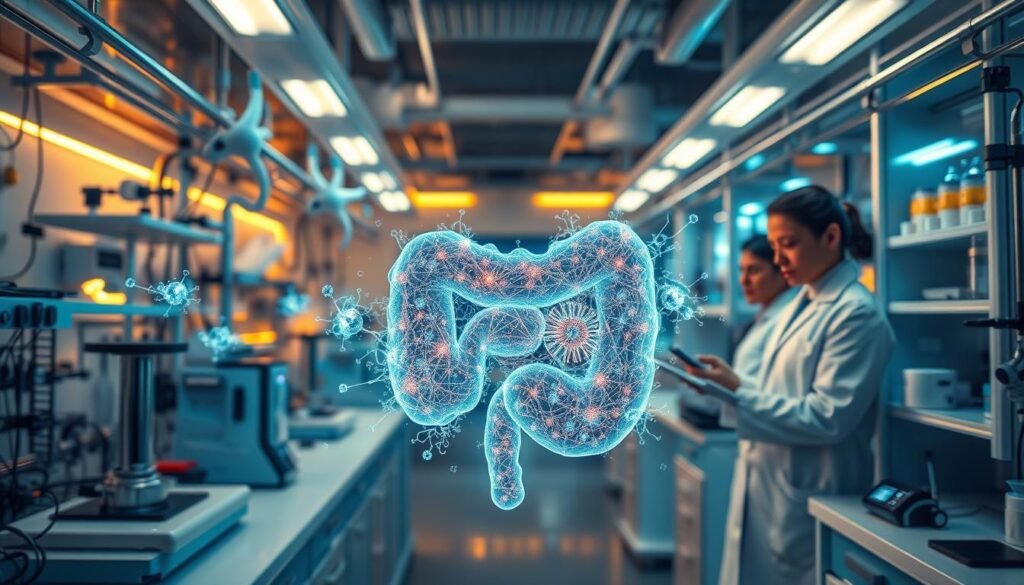
New technologies will be key in gut microbiome research. Machine learning algorithms are getting better at handling big data from microbiome studies. Also, combining single-cell analysis with AI will give us deeper insights into microbes.
Emerging technologies like quantum computing and advanced data analytics will speed up research. They will help us process complex data faster, leading to new discoveries.
Predicting Research Advancements
Future research will focus on personalized medicine. AI will help create treatments based on each person’s microbiome. This could lead to better treatments for diseases linked to gut health.
AI will also help predict how diet and lifestyle affect our gut microbiome. This predictive power is key for keeping our gut healthy.
| Research Area | Predicted Advancements | Potential Impact |
|---|---|---|
| Personalized Medicine | Tailored treatments based on microbiome profiles | More effective disease treatment |
| Predictive Analytics | Forecasting the impact of diet and lifestyle on gut health | Preventive measures for gut health maintenance |
Collaborations and Interdisciplinary Approaches
The future of gut microbiome research will involve collaborations across different fields. This includes microbiology, AI, and clinical medicine. These partnerships will help turn research into real-world applications.
Also, working together between academia and industry will drive innovation. This ensures new technologies and treatments reach those who need them.
- Interdisciplinary research collaborations
- Partnerships between academia and industry
- Development of new technologies and therapies
Regulatory Landscape for Microbiome Products
As research on the microbiome grows, the rules around these products are getting more complex. More people are interested in gut health supplements and microbiome products. This has led to changes in how regulatory bodies guide these products.
Current Regulations on Gut Health Supplements
In the United States, the Dietary Supplement Health and Education Act (DSHEA) of 1994 oversees gut health supplements. This law defines what dietary supplements are and what responsibilities manufacturers and the FDA have. Manufacturers don’t need FDA approval to sell their products. But, they must make sure their products are safe and follow Good Manufacturing Practices (GMPs).
The FDA has set rules for how dietary supplements, including gut health ones, can be labeled and marketed. Following these rules is key to avoid legal trouble.
FDA’s Role in Microbiome Research
The FDA is key in making sure microbiome products are safe and work well. The agency has programs to help develop these products. This includes guidelines for clinical trials and approval processes.
The FDA works with other research groups and industry leaders to learn more about the microbiome. This teamwork helps create rules based on the latest science.
Implications of AI on Compliance and Safety
AI is changing microbiome research and product development. It helps analyze complex data, spotting safety issues and ensuring rules are followed.
AI tools can help manufacturers follow GMPs and create safer, more effective products. But, using AI also brings up concerns about data privacy and the need for rules on AI use.
The Role of Education and Public Awareness
Public awareness and education are key to using AI in microbiome research. They help people make smart choices about their health.
Informing Consumers about AI’s Contributions
Teaching people about AI’s benefits in microbiome research is a big challenge. AI helps in many ways:
- It analyzes complex microbial data to find health patterns.
- It predicts how well probiotics will work and suggests diets.
- It deepens our understanding of the microbiome’s impact on health.
By telling people about these benefits, we help them manage their health better.
Promoting Research Findings to the Public
Sharing research findings is important for making AI’s benefits real. This means:
- Making complex data easy to understand.
- Using media and public forums to reach more people.
- Working with influencers and health advocates to spread the word.
Being clear and open is crucial in sharing research. It helps people trust and understand AI’s role in microbiome research.
Educational Programs for Health Practitioners
Health practitioners use AI in their work. They need good education on:
- How AI and deep learning work in microbiome analysis.
- The latest research and its impact on patient care.
- Tools and resources for using AI in their practice.
“The future of gut health depends on combining AI research with clinical practice. Teaching health practitioners is a vital step.”
By focusing on education and awareness, we can fully use AI in microbiome research. This leads to better health and a deeper understanding of our gut microbiome.
Conclusion: The Future of Gut Health with AI
AI is changing how we understand gut health and the microbiome. It helps us analyze complex microbial patterns and predict health outcomes. This leads to personalized health solutions.
Key Takeaways
AI in microbiome studies is very promising. It helps find new microbial signatures and predict diseases. More research is needed to fully use AI in natural health.
Driving Progress
Improving gut health research depends on teamwork. Tech companies, research institutes, and healthcare professionals must work together. This way, AI can help prevent and treat diseases.
Innovations on the Horizon
AI will keep getting better, leading to big changes in gut health. We’ll see personalized probiotics and AI health apps. These advancements will improve our gut health and overall well-being.
FAQ
What is the role of AI in gut microbiome research?
How does AI deep learning contribute to microbiome analysis?
What are the benefits of integrating AI with microbiome research?
How is AI being used to develop personalized health solutions?
What are the challenges facing AI and microbiome research?
What is the future of AI in gut microbiome research?
How can consumers stay informed about the latest developments in AI and microbiome research?
What is the regulatory landscape for microbiome products?
Related Posts

Ginger’s Role in Heart Health
It's important to know how natural ingredients affect our health,…

Cold Plunge Therapy for Wellness: Benefits, Risks & How to Get Started
Can dipping in icy water really make you feel better?…

🌟 Unlock Fat Burn Naturally: How Mitolyn Boosts Your Metabolism & Energy
Feeling sluggish and finding it hard to lose weight? The…