
Can the balance of phages in the gut hold the key to preventing Type1 Diabetes in children? Recent research suggests that these viral agents, which infect bacteria, play a crucial role in maintaining gut health. An imbalance, or dysbiosis, has been linked to various diseases, including diabetes.
The potential link between gut phages and Type1 Diabetes is gaining attention. Studies are exploring how these phages influence the gut microbiome and, subsequently, the immune system’s response. Understanding this relationship could lead to new preventive measures.
Key Takeaways
- The balance of phages in the gut may influence the development of Type1 Diabetes.
- Dysbiosis, or an imbalance of gut phages, is linked to various diseases.
- Research is ongoing to understand the relationship between gut phages and the immune system.
- New preventive measures for Type1 Diabetes may emerge from this research.
- The gut microbiome plays a crucial role in overall health.
Understanding Type1 Diabetes and Its Causes
The exact causes of Type 1 diabetes are still a mystery. But, research points to a mix of genetic and environmental factors. This condition happens when the body attacks and destroys the insulin-making cells in the pancreas, leading to a lack of insulin.
What is Type 1 Diabetes?
Type 1 diabetes is when the body’s immune system attacks the insulin-making cells in the pancreas. This makes it hard for the body to control blood sugar levels. Insulin therapy is key to managing this condition.
Genetic Factors in Type 1 Diabetes
Genetics play a big role in who gets Type 1 diabetes. Some genes make people more likely to get it. While genes are important, they’re not the only factor.
Environmental Influences on Diabetes Development
Environmental factors also play a part in getting Type 1 diabetes. Things like viruses, diet, and other outside factors can start the autoimmune response in people who are genetically prone. Some research shows that black cumin oil might help because it has anti-inflammatory properties. This could be good for reducing inflammation and pain, which is important for autoimmune diseases like Type 1 diabetes.
| Factor | Description | Impact on Type 1 Diabetes |
|---|---|---|
| Genetic Predisposition | Presence of specific genetic markers | Increases susceptibility |
| Environmental Triggers | Viral infections, dietary factors | May trigger autoimmune response |
| Dietary Supplements | Black cumin oil, probiotics | Potential anti-inflammatory benefits |
It’s important to understand these factors to find better ways to prevent and manage Type 1 diabetes. More research is needed to fully understand how genetics, environment, and supplements like black cumin oil work together.
The Gut Microbiome: An Overview
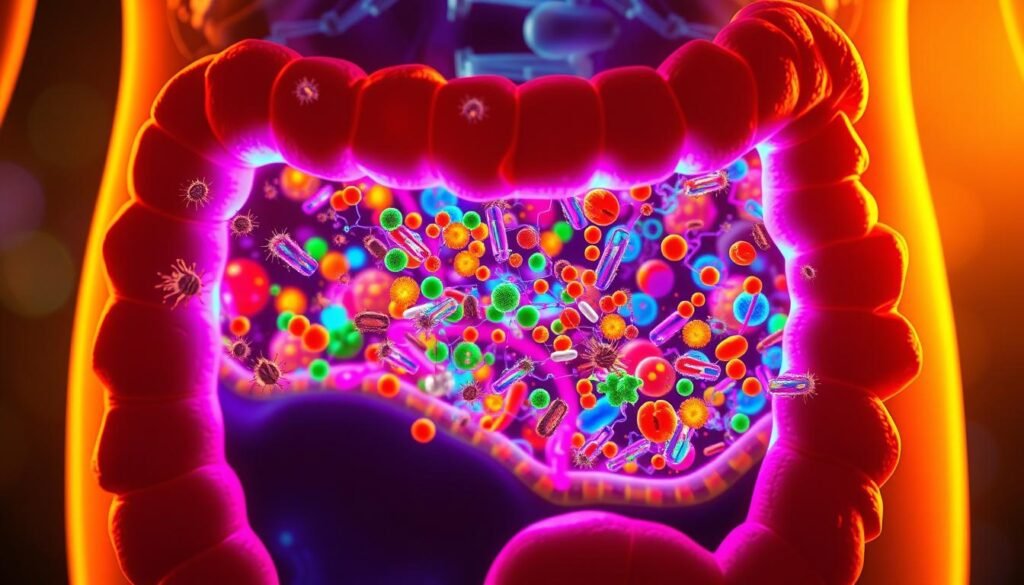
The balance of the gut microbiome is vital for our health. It’s a complex system with trillions of microorganisms in our gut.
Definition of the Gut Microbiome
The gut microbiome is made up of all the microorganisms in our gut. It includes bacteria, viruses, fungi, and more. These microorganisms are key to our health. A healthy gut has a balance of different microbes.
Importance of Microbiome Health
A balanced gut microbiome is crucial for digestion, immune function, and mental health. An imbalance, or dysbiosis, can cause health problems. Black cumin oil may help keep the gut healthy with its anti-inflammatory effects.
A healthy gut is also important for the immune system. It helps make antibodies and activate immune cells. Some research links black cumin oil for joint pain relief to a healthy gut, as it reduces body inflammation.
Factors That Influence Gut Health
Many things can affect the gut microbiome’s health. Diet, lifestyle, and environment play big roles. Eating fiber-rich foods and diverse fruits and veggies helps the gut. But, a diet full of processed foods and sugars can harm it.
- Diet: Eating a balanced diet with fermented foods and prebiotics supports gut health.
- Lifestyle: Stress, lack of sleep, and being inactive can harm the gut microbiome.
- Environmental Factors: Antibiotics, pollutants, and toxins can upset the gut’s balance.
Knowing these factors is key to a healthy gut microbiome. Making smart diet and lifestyle choices can help. This can reduce disease risks.
Introducing Gut Phages: What Are They?
The gut microbiome is more than just bacteria. It also has viruses called phages that are key to our gut health. These phages target specific bacteria, helping to keep the gut microbiota in balance.
Definition of Gut Phages
Gut phages are viruses that live in our gut. They are very specific to the bacteria they target. This specificity helps them control bacterial populations, which can affect our gut health and immune system.
Types of Phages Found in the Gut
There are many types of phages in our gut, like lytic and temperate phages. Lytic phages kill bacteria directly. Temperate phages can integrate into bacteria, changing their function. The variety of phages in our gut is huge, and scientists are still learning about their roles.
Types of Phages and Their Characteristics:
| Type of Phage | Characteristics | Impact on Bacteria |
|---|---|---|
| Lytic Phages | Infect and lyse bacteria | Kill bacteria directly |
| Temperate Phages | Integrate into bacterial genome | Alter bacterial function or kill |
| Filamentous Phages | Chronically infect bacteria without lysis | Modify bacterial phenotype |
How Phages Interact with Gut Microbiota
Phages have complex interactions with our gut microbiota. They can influence bacterial populations and impact our gut health. By targeting specific bacteria, phages help keep the microbiome balanced, which is important for our immune system and overall health. Research shows that an imbalance in phage populations might be linked to diseases like inflammatory conditions.
The relationship between phages and gut microbiota is constantly changing. Phages play a crucial role in shaping our microbial community. Understanding this relationship is key to exploring how phages could be used to treat diseases related to gut imbalance.
The Role of Phages in Immune Regulation
Phages are becoming important in how our immune system works. They live in our gut and help our immune system grow and function well. Research shows that phages can help our immune system in many ways, keeping it healthy and strong.
Phages’ Impact on Immune System Development
Phages affect how our immune system grows, especially when we’re young. Studies show that some phages help shape our immune system. This helps prevent diseases and makes sure our immune system can fight off bad germs.
- Phages can influence the gut microbiota, which in turn affects immune system development.
- The presence of certain phages has been linked to a reduced risk of autoimmune diseases.
- Phages can modulate the immune response, preventing excessive inflammation.
Anti-inflammatory Properties of Gut Phages
Gut phages have anti-inflammatory properties, which are key for keeping our immune system balanced. They help control the gut microbiota, reducing inflammation. This is important for fighting chronic diseases like arthritis. Some studies suggest that black cumin oil can also help reduce inflammation, working with phages.
The anti-inflammatory effects of gut phages can be summarized as follows:
- Modulation of the gut microbiota to reduce inflammatory responses.
- Direct interaction with immune cells to dampen excessive inflammation.
- Influence on the production of anti-inflammatory cytokines.
Phages and Autoimmunity: A Connection?
Research is showing that phages might help prevent autoimmune diseases. They help regulate our immune system and reduce inflammation. This could prevent autoimmunity. The study of phages and autoimmunity is still growing, but it’s promising for new treatments.
Some key points to consider in the connection between phages and autoimmunity include:
| Aspect | Role of Phages | Impact on Autoimmunity |
|---|---|---|
| Immune System Modulation | Phages influence the gut microbiota and immune response. | Reduces the risk of autoimmune diseases. |
| Anti-inflammatory Effects | Phages reduce inflammation by modulating the gut microbiota. | Decreases the likelihood of autoimmune disease onset. |
Phages and Their Protective Role Against Diabetes
Phages, or bacteriophages, are key to keeping our gut healthy and might help prevent diabetes. The gut microbiome is vital in type 1 diabetes development. Phages play a big role in this.
Mechanisms by Which Phages Prevent Diabetes
Phages control the gut microbiota by attacking certain bacteria. This balance is crucial for our immune system. It helps prevent autoimmune diseases like type 1 diabetes.
Some phages also have anti-inflammatory properties. This helps protect the pancreas’ beta cells from damage. Damage to these cells is a key feature of type 1 diabetes.
Research Studies Linking Phages to Reduced Diabetes Risk
Studies have looked into the connection between phages and diabetes risk. They found that people with type 1 diabetes have different phage profiles in their gut. This is compared to those who are healthy.
A study in a well-known journal found that some phages are more common in kids who don’t get type 1 diabetes. This suggests a protective role for these phages.
| Study | Findings | Implications |
|---|---|---|
| Study on phage profiles in type 1 diabetes | Different phage profiles in individuals with type 1 diabetes | Suggests a link between phages and diabetes risk |
| Research on phage prevalence in children | Certain phages more prevalent in children without type 1 diabetes | Indicates a potential protective effect of phages |
Case Studies: Phages and Children
Case studies on children have shed light on phages’ role in diabetes prevention. For example, a study tracked children at risk of type 1 diabetes. It found that those with more of certain phages were less likely to get the disease.
More research is needed, but these findings hint at phages’ importance in preventing type 1 diabetes in kids.
Some studies also look into cumin oil benefits for inflammation and black cumin oil benefits. They explore how these oils can reduce inflammation and boost health. This could work alongside phages’ protective effects.
Dietary Considerations to Enhance Gut Phages
What we eat greatly affects our gut microbiome, especially phages. These are key for our immune system and may help prevent diseases like Type 1 Diabetes.
Eating foods high in fiber, fruits, and veggies can boost gut phages. These foods give nutrients that help good bacteria grow. This, in turn, can increase phage numbers.
Foods That Promote Phage Growth
Some foods help grow good gut bacteria and their phages. These include:
- Fiber-rich foods like whole grains, legumes, and some fruits and veggies, which act as prebiotics.
- Fermented foods such as yogurt, kefir, sauerkraut, and kimchi, which have live cultures of good bacteria.
- Nuts and seeds, especially almonds and flaxseeds, which are full of healthy fats and fiber.
Eating these foods can make your gut microbiome more diverse and strong. This can help protect against Type 1 Diabetes.
Prebiotics and Probiotics for Gut Health
Prebiotics and probiotics are key for gut health. Prebiotics feed good bacteria, helping them grow. Probiotics add live good bacteria to the gut.
Together, prebiotics and probiotics can make the gut microbiome more stable and diverse. This can help support gut phages’ health.
Some studies show that certain prebiotics can help phages by growing their bacterial hosts. For example, black seed oil might help gut health, but more research is needed on its effect on phages.
The Role of Fermented Foods
Fermented foods are full of good bacteria and have been eaten for centuries. They can add to the gut microbiome’s diversity and support gut phages.
Foods like yogurt and kefir have probiotic bacteria that can affect the gut phageome. Eating these foods can increase phage numbers and diversity, helping balance the gut.
Adding different fermented foods to your diet can help your gut health. It may also help protect against autoimmune diseases by supporting gut phages.
The Promise of Phage Therapy
Phage therapy uses viruses to fight specific bacteria. It’s being looked at for treating tough medical problems. This new way of treating could help fight antibiotic resistance.
Defining Phage Therapy
Phage therapy uses viruses that attack bacteria to treat infections. It targets bad bacteria, helping the body’s good bacteria. This could solve the antibiotic resistance problem, as phages can be made to target certain bacteria.
Phages are precise, unlike antibiotics. They only attack bad bacteria, not good ones. This precision targeting makes treatment more effective and safer.
Applications in Autoimmune Diseases
Phage therapy might also help with autoimmune diseases. These diseases happen when the body attacks itself. Phages could help control the immune system and reduce inflammation.
Some studies show phage therapy could help with rheumatoid arthritis. This condition causes a lot of pain and inflammation. Natural remedies like black cumin oil are also being studied for their anti-inflammatory effects. These remedies show there are many ways to fight inflammation.
Current Research and Future Directions
Researchers are studying phage therapy’s safety and effectiveness. They’re looking at how it can help with different diseases, including autoimmune ones.
As research goes on, phage therapy might become a common treatment. It can be made to target specific bacteria and could help the immune system. We’re learning more about its potential, offering hope for those with few treatment options.
Challenges and Limitations of Research on Gut Phages
Studying gut phages is tough, with many scientific and ethical hurdles. Researchers aim to use gut phages to prevent type 1 diabetes. But, they face many challenges that make their work hard.
Scientific Hurdles in Studying Phages
The gut microbiome is very complex. It has thousands of bacteria and phages, making it hard to understand their interactions. The gut environment also changes a lot, which adds to the difficulty.
The vast diversity of phages and their hosts makes it hard to study their effect on diabetes prevention. Researchers need advanced methods to study these complex interactions.

Ethical Considerations in Phage Research
Ethical issues are also important in phage research. Ensuring the safety and consent of participants in clinical trials is key. There’s also worry about the potential for bad effects, like antibiotic resistance or changes to the microbiome.
A researcher noted, “Phage therapy raises ethical questions about long-term health and environmental effects.” This shows the need for careful ethics in phage research.
The Need for More Clinical Studies
More clinical studies are needed to understand gut phages better. These studies help turn lab and animal research into real-world health benefits. They also show if phage therapy is safe and effective for preventing type 1 diabetes.
Some natural compounds, like cumin oil, have health benefits, including reducing inflammation. While not directly linked to phage research, they might help with phage therapy or improve gut health.
In summary, despite the challenges, researching gut phages is vital for finding new treatments for type 1 diabetes. As research improves, we’ll likely see new ways to overcome these challenges, helping those at risk of this disease.
How Parents Can Support Their Children’s Gut Health
Supporting a healthy gut in kids is a big job. It involves changing their diet, getting them to move more, and teaching them to handle stress. As a parent, you play a key role in helping your child’s gut stay healthy. This can greatly improve their overall health.
Encouraging Healthy Eating Habits
One key way to help is through what they eat. Encourage them to eat foods rich in prebiotics like asparagus, bananas, and onions. These foods help good bacteria grow in their gut. Also, adding fermented foods like yogurt and sauerkraut to their meals can give them probiotics.
Some studies show that natural oils, like black seed oil, might help with health, including pain relief. More research is needed, especially for kids. But, it’s important to keep their diet balanced with lots of whole foods.
Importance of Physical Activity
Being active is key for health and gut health. Exercise helps make the gut microbiome more diverse. This is good for gut health. Encourage your kids to play sports or just run around outside.
Managing Stress for Better Gut Health
Stress can hurt the gut microbiome. Teach your kids to manage stress with mindfulness, meditation, or deep breathing. Also, make sure they get enough sleep for their gut health.
Some natural oils, like black cumin oil, might help with arthritis and inflammation pain relief. But, always talk to a doctor before giving kids any supplements.
| Aspect | Benefit | Action |
|---|---|---|
| Diet | Promotes beneficial gut bacteria | Include prebiotic and fermented foods |
| Physical Activity | Enhances gut microbiome diversity | Encourage regular exercise |
| Stress Management | Reduces negative impact on gut | Teach mindfulness and ensure adequate sleep |
Conclusion: A Bright Future with Gut Phages
Exploring gut phages could lead to new ways to prevent Type 1 Diabetes in kids. Scientists are learning how gut bacteria and phages work together. This knowledge helps find new ways to keep our gut healthy.
Phages’ Potential in Diabetes Prevention
Phages might help control our immune system and stop diseases like Type 1 Diabetes. Eating foods with prebiotics and probiotics can boost gut health. Foods with black cumin oil also have anti-inflammatory effects.
This shows how diet and phage therapy could work together. It’s a promising area of study.
Ongoing Research and Its Importance
More research is needed to understand how phages and gut bacteria interact. This is key to finding ways to prevent Type 1 Diabetes. As studies continue, phage therapy might become a common treatment.
Advice for Parents and Caregivers
Parents can help their kids’ gut health by feeding them well. A diet full of fruits, veggies, and fermented foods is good. Also, encourage exercise and stress management.
As research gets better, staying updated is important. This helps make smart choices for your child’s health.
FAQ
What are the benefits of black cumin oil for arthritis and inflammation pain relief?
How does black seed oil help with arthritis relief?
Can black cumin oil be used for joint pain relief?
What are the benefits of using cumin oil for inflammation?
Is black cumin oil effective for pain relief?
How can I use black cumin oil for arthritis relief?
Are there any potential side effects of using black cumin oil for inflammation pain relief?
Can black seed oil be used in conjunction with other treatments for arthritis?
Related Posts

Discover the Latest Research on Healthy Food
The latest research shows big gaps in what Americans eat.…

The Science Behind Hydrotherapy and Contrast Showers
Can changing the water temperature really improve your health? It…

Cold Plunge Therapy for Wellness: Benefits, Risks & How to Get Started
Can dipping in icy water really make you feel better?…