
Can making your home a peaceful oasis really help your mental health? The idea of bringing nature indoors is becoming more popular. And it’s for a good reason.
Adding natural design elements to your home can greatly improve your mental health. It turns your space into a place where you can relax and feel less anxious.
Indoor nature therapy is easy to start. Just add plants, use natural materials, or let in more sunlight. These steps help make your home a calm place that supports your well-being.
Key Takeaways
- Natural home design elements can significantly impact mental health.
- Incorporating plants and natural materials can reduce stress.
- Maximizing natural light can boost mood and well-being.
- Creating a serene home environment is key to mental health.
- Simple changes can make a significant difference in mental well-being.
Understanding Indoor Nature Therapy
Indoor nature therapy brings the outdoors into our homes to help us relax and feel less stressed. It’s about how our surroundings affect our well-being. This idea is key to improving our mental health.
What is Indoor Nature Therapy?
Indoor nature therapy, or nature-inspired home decor, adds natural elements to our homes. This includes plants, natural light, and earthy colors. It makes our spaces look good and helps our mental health.
Being in nature is good for our minds and bodies. Studies show it lowers stress, boosts mood, and helps with anxiety and depression.
Benefits for Mental Health
Indoor nature therapy offers many mental health benefits. It helps us feel less stressed, improves our mood, and boosts our thinking skills. Research shows natural environments calm us down, reducing anxiety and stress.
- Reduced stress and anxiety
- Improved mood and overall sense of well-being
- Enhanced cognitive functioning, including improved concentration and creativity
- Better sleep quality
The table below summarizes the mental health benefits associated with indoor nature therapy:
| Mental Health Benefit | Description |
|---|---|
| Stress Relief | Exposure to natural elements indoors can lower cortisol levels and reduce stress. |
| Mood Improvement | Nature-inspired decor can boost mood and overall sense of well-being. |
| Cognitive Function | Indoor nature therapy can improve concentration, creativity, and productivity. |
The Science Behind Nature and Well-Being
Nature’s impact on human well-being is complex and fascinating. Research shows its many benefits. This has sparked interest in using nature indoors.
Research on Nature and Stress Relief
Studies show nature can lower stress levels. A Journal of Environmental Psychology study found natural environments reduce cortisol, a stress hormone.
Using indoor greenery for stress relief is now common. Plants like snake plants and peace lilies are not just pretty. They also help reduce stress.
| Plant Type | Stress Relief Benefits | Maintenance Level |
|---|---|---|
| Snake Plant | Reduces air pollutants, promotes relaxation | Low |
| Peace Lily | Enhances air quality, calms the mind | Moderate |
| Spider Plant | Easy to care for, reduces stress through interaction | Low |
How Nature Affects Our Mood
Nature exposure boosts mood and fights depression. Natural sights and sounds make us happier and more relaxed.
Creating a calming home environment is more than looks. It’s about making a space that supports mental health. Adding plants, natural light, and earthy colors can greatly improve mood.
Understanding how nature affects us helps us design better living spaces. This way, we can enhance our mental health.
Key Elements of Indoor Nature Design
Creating a home that supports well-being is more than looks. It’s about blending nature into your space. Indoor nature design mixes natural elements for a healthy, peaceful home.
Incorporating Plants for Aesthetic and Health
Plants are key in indoor nature design. They beautify rooms and improve air quality. They also help us feel calm. Some top picks include snake plants, peace lilies, and spider plants.
- Snake plants purify the air.
- Peace lilies reduce stress and anxiety.
- Spider plants are easy to care for and add greenery.
Utilizing Natural Light
Natural light is vital in indoor design. It boosts mood and energy. Use light-colored window treatments and mirrors to spread light.
- Sheer curtains filter light and reduce glare.
- Place furniture to avoid blocking light.
- Install skylights or large windows if you can.
Choosing Earthy Colors
The colors in your home matter too. Earthy tones like sage green, sand beige, and driftwood gray make spaces feel natural and calm.
- Sage green creates a soothing vibe.
- Sand beige adds warmth and coziness.
- Driftwood gray offers a calming atmosphere.
Adding plants, natural light, and earthy colors to your home design does more than look good. It supports your mental health and well-being.
Selecting the Right Indoor Plants
Choosing the right indoor plants is crucial for a calm and healthy home. These plants purify the air, reduce stress, and uplift our mood. They are key to indoor nature therapy.
Best Houseplants for Stress Relief
Lavender is great for stress relief because of its calming scent. Snake Plants are tough and clean the air well. Peace Lilies remove toxins, and Spider Plants are easy to care for and look good in hanging baskets.
- Lavender: Promotes relaxation and improves sleep quality.
- Snake Plants: Effective in removing toxins and easy to maintain.
- Peace Lilies: Known for their elegant white blooms and air-purifying properties.
- Spider Plants: Versatile and easy to propagate.
Care Tips for Low-Maintenance Plants
Caring for indoor plants is easy. For plants like Succulents and ZZ Plants, water them once a week. Make sure they get the right light; Snake Plants do well in low light, while Succulents need bright, indirect light.
To keep your plants healthy, don’t overwater. Check the soil by sticking your finger in it up to the first knuckle. If it’s dry, it’s time to water. Also, fertilize your plants during the growing season to help them grow and reduce stress.
Creating Relaxation Spaces at Home
Adding natural elements to your home can make it a peaceful place. This not only makes your home look better but also helps you relax. It can even lower your stress levels.
Designing a Meditation Corner
A meditation corner is perfect for finding calm. Think about using comfy seating, soft lights, and soothing colors. Adding plants or a water feature can make it even more peaceful.
Choose a quiet spot for your meditation area. Use materials that soak up sound. Adding a touch of nature, like a living wall or fresh branches, can make it even more calming.
Building a Reading Nook with Nature Touches
A cozy reading nook is great for unwinding. Pick a spot with lots of natural light. Add a comfy chair, a side table, and a good light for reading. Adding a plant or river rocks can make it even more relaxing.
Think about the colors you use. Earthy tones like sage green or sandy beige can help you relax. Adding nature-inspired decor, like a shell or driftwood, can connect you to the outdoors.
| Design Element | Meditation Corner | Reading Nook |
|---|---|---|
| Nature-Inspired Elements | Plants, Water Feature | Potted Plants, River Rocks |
| Color Palette | Calming Colors | Earthy Tones |
| Lighting | Soft Lighting | Natural Light, Reading Light |
Soundscapes and Indoor Nature
Indoor nature therapy benefits from natural soundscapes, helping to relax and reduce stress. The sounds we hear make the indoor space feel more like nature. This makes the experience more immersive.
Importance of Natural Sounds
Natural sounds, like birdsong or water flow, greatly impact our mental health. Studies show they can lower stress, boost mood, and improve thinking. Adding these sounds to indoor therapy makes it more effective for mental health.
Benefits of Natural Sounds include:
- Reduced stress and anxiety
- Improved mood and emotional well-being
- Enhanced cognitive function and focus
Implementing Sound Elements in Design
To add soundscapes to indoor therapy, use sound systems or apps that mimic nature. Place speakers or devices in spots where they’re most enjoyed, like near plants or in meditation areas. This can make the experience better.
Tips for Implementation:
- Choose calming, natural sounds like rain or ocean waves.
- Set the volume right to avoid overwhelming you.
- Combine sounds with plants and natural light for a full experience.
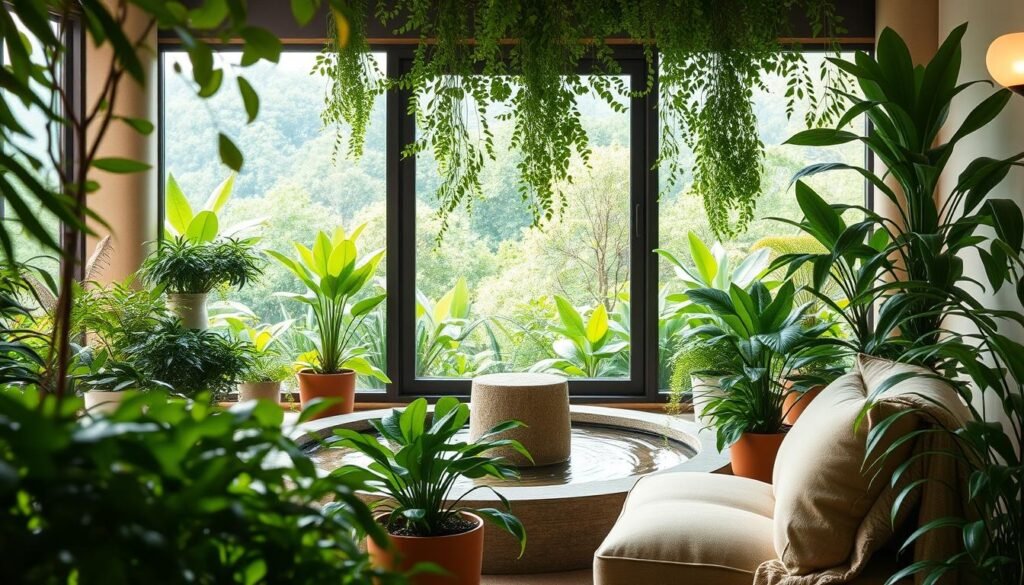
By carefully adding soundscapes to indoor therapy, we can create a more immersive and healing space. This supports our mental health and well-being.
The Role of Aromatherapy in Indoor Nature Therapy
Aromatherapy is key in indoor nature therapy. It uses essential oils to bring calm and well-being. Adding aromatherapy to your indoor space boosts mental health benefits.
Essential oils in aromatherapy deeply affect health. Certain scents can relax, reduce anxiety, and help with depression.
Essential Oils for Stress Relief
Lavender, chamomile, and bergamot are top oils for stress relief. You can use them alone or mix them for a unique scent. This scent helps relax and calm.
To use essential oils, try a diffuser, apply them on skin (diluted), or add to bath water. Essential oils are versatile, fitting into many lifestyles.
| Essential Oil | Benefits | Usage |
|---|---|---|
| Lavender | Promotes relaxation, improves sleep quality | Diffuser, topical application |
| Chamomile | Reduces anxiety, soothes emotional distress | Diffuser, bath, topical application |
| Bergamot | Reduces stress, uplifts mood | Diffuser, topical application |
Adding Scented Elements to Your Space
Other scented items like candles, potpourri, and diffusers also improve your space. Place them to make a calming atmosphere that matches your indoor nature design.
Choose scented items wisely. Think about the scent’s strength and how it will mix with others. A balanced mix creates a peaceful space.
Adding aromatherapy to your indoor nature therapy makes a holistic space. It cares for both body and mind. Essential oils or scented items boost your well-being.
Sustainable Practices in Home Design
Sustainable home design boosts mental health by making a space calm and natural. Using eco-friendly materials and practices improves well-being.
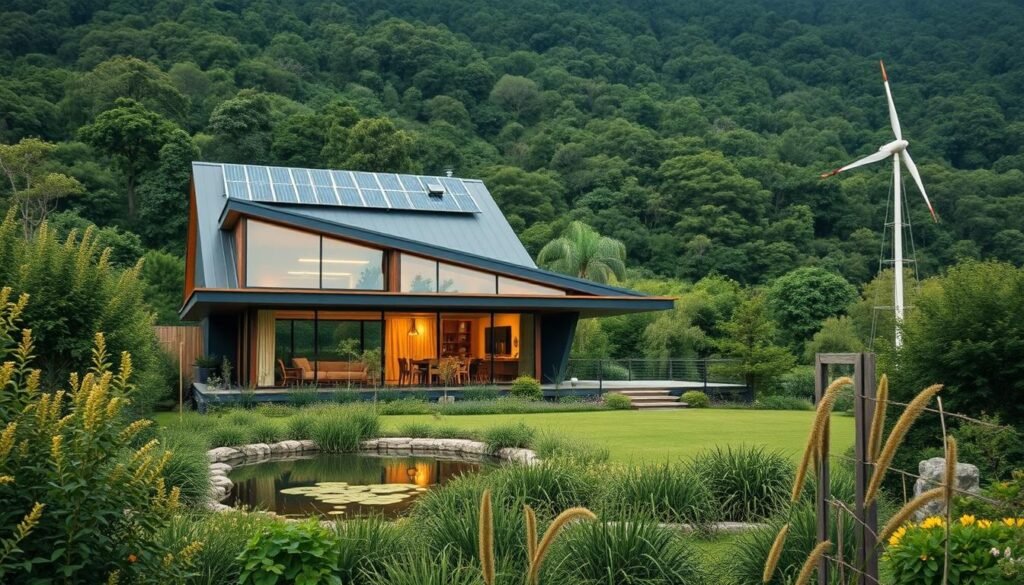
Using eco-friendly materials is key in sustainable home design. These materials cut down on environmental harm and make homes healthier.
Eco-Friendly Materials for Your Home
Choosing the right materials is important. Recycled materials, sustainably sourced wood, and low-VOC paints are great choices. They reduce waste, protect the environment, and improve air quality.
- Recycled glass countertops
- Sustainably sourced hardwood flooring
- Low-VOC paints and finishes
How Sustainability Enhances Well-Being
Sustainable home design is good for mental health. A well-designed, sustainable home lowers stress, boosts mood, and improves well-being. It creates a calm and natural space.
Using natural light, adding plants, and choosing earthy colors also help. This approach supports mental health and connects us to nature.
In conclusion, sustainable home design is crucial for mental health. By picking eco-friendly materials and following sustainable design, homes become calming and supportive of well-being.
DIY Projects for Enhancing Nature at Home
Turning your home into a natural paradise is easy with DIY projects. Adding nature to your decor boosts your mood and makes your home more peaceful.
Vertical Gardens and Green Walls
Vertical gardens, or green walls, bring greenery indoors. They clean the air and add beauty to any room. Use a trellis or modular planter to set up a vertical garden. Choose plants that do well indoors, like ferns or peace lilies, to keep your garden looking great.
- Select a suitable location with adequate light.
- Choose a planter that fits your space and style.
- Prepare your plants and planters.
- Install your vertical garden, ensuring it’s secure and level.
Terrariums and Indoor Water Features
Terrariums are tiny gardens in glass containers. They’re easy to care for and look beautiful. To make one, pick a clear glass container and layer rocks, charcoal, and soil. Add plants and decorative rocks for a finishing touch.
Indoor water features, like fountains or aquariums, also add to your home’s natural feel. The sound of water can be very calming. Think about your space and style when setting up a water feature. A small fountain can make a big difference.
| DIY Project | Benefits | Maintenance Level |
|---|---|---|
| Vertical Garden | Air purification, aesthetic appeal | Moderate |
| Terrarium | Low maintenance, unique decor | Low |
| Indoor Water Feature | Soothing sounds, visual interest | Moderate to High |
“Nature is not a place to visit. It is home.” – Gary Snyder
Adding these DIY projects to your home makes it more nature-friendly. Whether you build a vertical garden, make a terrarium, or install a water feature, you’ll make your home more beautiful and healthy.
Evaluating the Impact of Indoor Nature Therapy
Adding indoor nature therapy to our homes is key. It helps us feel better mentally and reduces stress. We need to see how well it works.
Assessing Mental Health Outcomes
We track mood, anxiety, and overall happiness to see if indoor nature therapy helps. This way, we can make our homes better for our mental health.
Involving Family Members in the Feedback Process
It’s important to hear from our family about indoor nature therapy. Their feedback helps us see what works and what doesn’t. This way, we can make our homes better for everyone’s well-being.
By checking how indoor nature therapy works and making changes, we can make our homes healthier. This helps us feel better and reduces stress.
FAQ
What is indoor nature therapy, and how does it help with stress relief?
How do I choose the right plants for indoor nature therapy?
Can indoor nature therapy be effective without a lot of natural light?
How can I incorporate soundscapes into my indoor nature therapy?
What are some eco-friendly materials I can use for sustainable home design?
How can I measure the impact of indoor nature therapy on my mental health?
Can I create a DIY vertical garden for indoor nature therapy?
How often should I maintain my indoor plants for optimal benefits?
Related Posts

Exploring the Latest Mental Wellness Research
New research in mental wellness is changing how we treat…

Herbal Tea to Relieve Stress and Anxiety
In today's fast world, stress and anxiety are common. Many…