
Are you getting the right amount of rest for your skin? The answer may lie in understanding your body’s internal clock and how it affects your skin’s health.
Research shows that your sleep chronotype greatly impacts your skin. Knowing if you’re a morning person or a night owl helps you tailor your beauty routine for better skin.
By making your beauty routine fit your body’s natural rhythms, you can see big improvements in your skin. This personalized approach helps you unlock your skin’s full potential.
Key Takeaways
- Understanding your sleep chronotype is crucial for optimal skin health.
- A tailored beauty routine can make a significant difference in achieving healthier skin.
- Aligning your routine with your body’s natural rhythms is key.
- A personalized approach can lead to more radiant and healthier skin.
- Knowing whether you’re a morning lark or night owl can inform your beauty routine.
Understanding Sleep Chronotypes and Their Impact on Skin
Knowing your sleep chronotype is key to a good skincare routine. It helps your skin repair and grow better. Our bodies have an internal clock that controls many things, including skin health.
The Science Behind Chronotypes
Chronotypes come from our natural circadian rhythm. This rhythm is managed by genes, hormones, and the environment. It affects when we sleep, wake, and how our skin regenerates.
Circadian rhythm is vital for skin health. It controls when our skin repairs itself. Studies show that skin health is linked to our body’s natural cycle.
Different Types of Chronotypes
There are mainly three chronotypes: morning larks, night owls, and in-betweens. Morning larks wake up early and feel alert in the morning. Night owls go to bed late and wake up later, feeling alert in the evening.
| Chronotype | Sleep Preferences | Alertness Peaks |
|---|---|---|
| Morning Larks | Early bedtime, early rise | Morning |
| Night Owls | Late bedtime, late rise | Late Afternoon/Evening |
| Intermediate | Balanced sleep schedule | Variable |
How Chronotypes Affect Skin Health
Chronotype greatly impacts skin health. It affects when and how well skin repairs itself. For example, those with a later chronotype might have slower skin regeneration. This can make their skin look dull and tired.
Knowing your chronotype helps tailor your skincare to your body’s natural rhythms. This makes your skincare routine more effective.
The Circadian Rhythm: More Than Just Sleep
Our circadian rhythm plays a big role in keeping our skin healthy and glowing. It’s like an internal clock that controls many things, like when we sleep and wake up, and even how our skin repairs itself.
Defining Circadian Rhythms
Circadian rhythms are the internal processes in our bodies that happen every 24 hours. They’re influenced by things like light and dark, and are managed by genes and proteins.
These rhythms affect many things, like when we sleep, how our hormones work, and even our body temperature. Knowing and working with our natural rhythm can greatly improve our health and wellbeing.
The Role of Circadian Rhythms in Skin Repair
The skin, being the biggest organ in our body, is also affected by our circadian rhythm. Skin cells have their own internal clock that tells them when to repair and grow. At night, the skin fixes itself by adding moisture, fixing damage, and making new cells.
This repair process is key to keeping our skin healthy. A study in the Journal of Investigative Dermatology showed that the skin’s barrier gets stronger at night. This is because certain genes involved in repair are more active then.
“The skin’s natural repair process is a critical component of maintaining healthy, youthful-looking skin. By understanding and working with our circadian rhythm, we can optimize our skincare routines to support this natural process.”
Implications for Skincare
Knowing how our circadian rhythm affects our skin is important for skincare. By matching our skincare routines to our body’s natural rhythms, we can make our products and treatments work better.
- Use products with antioxidants in the day to protect the skin from harm.
- Apply hydrating products at night to help the skin repair itself.
- Change the timing of skincare treatments to match our body’s natural rhythm.
By following a circadian beauty routine that syncs with our body’s clock, we can get healthier, brighter skin.
Tailoring Skincare to Your Chronotype
Your skin’s health is tied to your body’s internal clock, or chronotype. Knowing this can improve your skincare routine.
Morning Skincare Routine for Early Birds
Early risers should start with a gentle cleanser to remove overnight dirt. Then, use a toner to balance your skin’s pH. Next, apply a moisturizer with SPF to protect against UV rays and pollution.
Finally, add a primer or serum to get your skin ready for makeup.
Key products for morning: Gentle cleanser, toner, moisturizer with SPF, primer or serum.
Evening Skincare Routine for Night Owls
Night owls need a routine that repairs and rejuvenates. Start with a double cleanse to remove makeup and pollutants. Then, use an exfoliant or treatment product with retinol or alpha-hydroxy acids to renew your skin.
End with a moisturizer or night cream to hydrate and repair while you sleep.
Essential products for evening: Double cleanser, exfoliant or treatment product, nourishing moisturizer or night cream.
Customizing Products for Your Chronotype
Choosing the right skincare products for your chronotype can make a big difference. Early birds might use morning products with antioxidants to fight daytime damage. Night owls can use evening products with repair ingredients to help their skin regenerate while they sleep.
By matching your skincare routine to your natural rhythms, you can get healthier, more resilient skin. Try different products and routines to see what works best for you.
Key Ingredients to Consider for Different Chronotypes
Knowing the right skincare ingredients is crucial for your skin’s health. It’s especially important when you consider your chronotype. The success of your skincare routine depends on the products and when you use them. This should match your body’s natural rhythms.
Antioxidants for Daytime Skin Protection
During the day, your skin faces many dangers like UV rays and pollution. Antioxidants are key in protecting your skin. They include vitamin C, ferulic acid, and green tea extract. These antioxidants fight off free radicals, reducing damage and preventing early aging.
Hydrators for Nighttime Repair
At night, your skin needs to repair and rejuvenate. Hydrating ingredients are vital for keeping your skin moist. Hyaluronic acid, glycerin, and ceramides are great for keeping moisture in and soothing dry skin.
Adjusting Active Ingredients Based on Timing
When you apply skincare products matters a lot. For example, retinol or alpha-hydroxy acids (AHAs) work best at night. They can make your skin more sensitive to sunlight. On the other hand, using products with SPF during the day is essential for sun protection. Knowing when to use certain ingredients can make them more effective and reduce side effects.
By customizing your skincare routine for your chronotype and adjusting ingredients for the time of day, you can improve your skin’s health and look. This personalized skincare ensures you’re using the right products at the right time. It helps support your skin’s natural cycles.
The Biological Clock and Skin Repair Timing
The body’s internal clock is key for skin repair and growth. It follows the circadian rhythm, affecting skin health. This timing is crucial for skin care.
How Skin Regeneration Cycles Work
Skin regeneration follows the body’s natural cycles. At night, the skin repairs and grows more. This is due to hormone changes. Knowing these cycles helps improve skincare routines.
- Peak Repair Hours: Skin repair is best from 10 PM to 2 AM. This is when to use products that help skin grow.
- Daytime Protection: Daytime is for protecting the skin from harm. This includes UV rays and pollution.
The Best Times for Applying Key Products
When you apply skincare products matters a lot. Using them when your body is most receptive boosts their effect.
- Apply antioxidant serums in the morning to fight daytime damage.
- Use hydrating and regenerative products at night for repair.
Aligning Skincare with Your Natural Rhythms
For the best skincare, match it with your body’s rhythms. Knowing your chronotype helps tailor your routine.
Early risers should protect their skin during the day. Night owls should focus on repair at night.
Matching skincare with your body’s clock can enhance skin health. This approach makes skincare more effective and personal.
The Impact of Sleep Quality on Skincare
Sleep quality is key to skin health. It helps the body fix damaged cells and build new ones. This is vital for keeping skin healthy.
Sleep Stages and Their Effects on Skin
Sleep has different stages, like REM and non-REM. Non-REM sleep is special because it releases hormones that help fix skin.
Each sleep stage has its own role in skin health. For example, slow-wave sleep helps make skin elastic and firm.
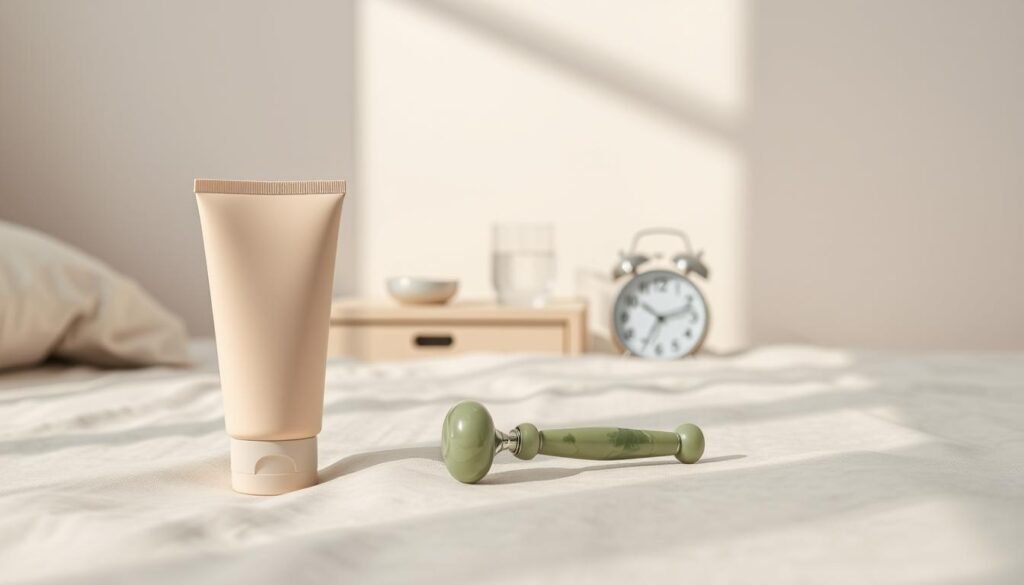
Common Sleep Disorders and Skin Issues
Issues like insomnia and sleep apnea can harm skin. They cause stress and inflammation, leading to acne, dull skin, and early aging.
Sleep apnea, for instance, raises cortisol levels. This stress hormone can cause inflammation and skin problems. It’s important to manage these sleep disorders for healthy skin.
Improving Sleep for Better Skin Health
To improve sleep, keep a regular sleep schedule. Make your bedroom sleep-friendly and avoid caffeine before bed. Start a calming bedtime routine to signal sleep time.
Also, try relaxation techniques like meditation or deep breathing. They can help reduce stress and improve sleep. Better sleep means better skin and overall health.
The Role of Diet in Sleep and Skin Health
A balanced diet is key for good sleep and healthy skin. It’s a big part of a circadian beauty routine. What we eat and when we eat it affects our health, sleep, and skin.
Nutrients That Support Skin Repair
Some nutrients are crucial for skin health and repair. These include:
- Antioxidants: In berries, leafy greens, and other fruits and veggies, antioxidants protect the skin from damage.
- Omega-3 Fatty Acids: In fatty fish, nuts, and seeds, omega-3s help reduce inflammation in the skin.
- Vitamin C: In citrus fruits, bell peppers, and broccoli, vitamin C is key for collagen and skin repair.
Foods to Avoid for Better Sleep and Skin
Some foods can harm our skin and sleep. It’s best to limit or avoid:
- Caffeine and Nicotine: They can mess with sleep and skin health.
- Sugary and Processed Foods: They cause inflammation and harm the skin.
- Heavy Meals Before Bedtime: Big meals before bed can ruin sleep quality.
Meal Timing and Its Influence on Skin
When we eat can also affect our skin. Eating with our natural rhythms helps skin repair and health. For example:
- Eating a Balanced Breakfast: It boosts metabolism and gives energy all day.
- Avoiding Late-Night Snacks: It improves sleep by not breaking the fasting period.
- Staying Hydrated: Drinking water all day keeps skin hydrated and healthy.
Knowing how diet affects sleep and skin helps us make better choices. This supports our chrono skincare routine and overall health.
Environmental Factors Influencing Skin and Sleep
It’s important to know how our environment affects our skin and sleep. Our surroundings play a big role in our health and sleep patterns. This knowledge helps us create better skincare routines and sleep better.
Light Exposure and Its Effects on Skin
Light is a key factor in our skin and sleep health. Natural light helps our bodies stay in sync with day and night. But too much UV light can harm our skin, causing aging and cancer risks. Finding the right balance is key.
Tips for Managing Light Exposure:
- Use sunscreen with a high SPF during the day to protect against UV damage.
- Wear protective clothing and seek shade when spending extended periods outdoors.
- Limit exposure to screens and artificial lighting in the evening to promote better sleep.
Pollution and Its Impact on Circadian Rhythms
Air pollution is harmful to our skin and sleep. It can cause inflammation, stress, and damage to our skin’s barrier. It also messes with our natural sleep cycle.
Reducing the Impact of Pollution:
- Use skincare products containing antioxidants to combat pollution-induced oxidative stress.
- Cleanse your skin thoroughly, especially after spending time outdoors.
- Consider using air purifiers in your home to reduce indoor pollution levels.
Creating a Sleep-Conducive Environment
A good sleep environment is crucial for better sleep and skin health. It helps our bodies repair and regulate during sleep.
| Environmental Factor | Impact on Sleep | Recommendation |
|---|---|---|
| Temperature | A cooler bedroom can promote better sleep. | Keep your bedroom at a comfortable temperature, around 60-67°F. |
| Noise | Excessive noise can disrupt sleep patterns. | Use earplugs, white noise machines, or soundproofing to minimize noise. |
| Light | Darkness is essential for melatonin production. | Use blackout curtains or blinds to keep your bedroom dark. |
“A well-designed sleep environment is crucial for achieving quality sleep, which in turn supports skin health and overall well-being.” – Sleep Expert
By managing light, pollution, and sleep environment, we can improve our sleep and skin health. Adding these practices to our daily life can greatly enhance our well-being.
Mindfulness and Skincare: A Connection
Mindfulness is changing how we care for our skin. It offers a complete way to get glowing skin. By adding mindfulness to our daily skincare, we make it more effective. Our mental state greatly affects our skin’s health.
Stress Management Techniques
Keeping stress levels down is key for healthy skin. Activities like meditation and deep breathing can lower stress. Meditation helps by reducing stress hormones like cortisol, which harm the skin.
To add stress management to your skincare, start with simple steps. For example, do deep breathing while applying products. This relaxes you and helps your products work better.
The Role of Relaxation in Skin Health
Relaxation is vital for skin health. It reduces inflammation and helps repair the skin. Adequate sleep is also important for skin repair and rejuvenation.
Having a calming bedtime routine can greatly improve your skin. Try reading, taking a warm bath, or doing gentle stretches. These activities tell your body it’s time to rest, improving sleep quality.
Integrating Mindfulness into Your Routine
To add mindfulness to your skincare, focus on the moment. Notice the sensations, smells, and the act of caring for your skin. This turns a simple task into a calming experience.
Begin by setting aside a few minutes each day for your skin care. Spend time massaging your skin gently. This boosts blood flow and product absorption. It also gives you a calm break in your day.
| Mindfulness Practice | Skincare Benefit | Tips for Implementation |
|---|---|---|
| Deep Breathing | Reduces stress, improves skin clarity | Practice while cleansing your face in the morning. |
| Meditation | Decreases cortisol levels, enhances skin health | Start with short sessions (5-10 minutes) before your nighttime skin care regimen. |
| Gentle Stretching | Improves circulation, relaxes facial muscles | Incorporate into your morning routine to boost energy and skin vitality. |

Skincare Devices and Technologies
The future of skincare is all about technology. Devices are being made to help our skin health, matching our body’s natural cycles. As we learn more about circadian beauty routines, these devices play a big role.
Benefits of Light Therapy
Light therapy is a game-changer in skincare. It can make your skin look better and even reduce aging signs. Devices that send out special light can tackle issues like acne and dark spots.
Key benefits of light therapy include:
- Enhanced collagen production
- Reduced inflammation
- Improved skin tone
Devices to Enhance Skin Repair at Night
Our skin repairs best at night. Devices made for nighttime can really help with this. From LED masks to microcurrent tools, they boost our skin’s natural repair work.
Some of the most effective nighttime skincare devices include:
| Device Type | Benefits | Key Features |
|---|---|---|
| LED Masks | Stimulates collagen, reduces acne | Different light wavelengths for various skin concerns |
| Microcurrent Devices | Lifts and firms the skin | Non-invasive, pain-free |
| Radiofrequency Devices | Tightens skin, reduces fine lines | Stimulates collagen production |
Innovations in Circadian Beauty
Technology and circadian biology are coming together in skincare. Devices that match our natural cycles are becoming common. They offer personalized routines that fit our body’s needs at any time.
As we delve deeper into chrono skincare, it’s clear that technology is key. By using devices that understand our natural rhythms, we can get the best skin health.
Real-Life Applications: Case Studies
Real-life case studies show that tailoring skincare to individual sleep chronotypes can yield remarkable results. By understanding how one’s sleep patterns influence skin health, individuals can make informed decisions about their skincare routines.
Success Stories of Chronotype-Based Routines
Several individuals have reported significant improvements in their skin health after adopting chronotype-based skincare routines. For instance, a morning person who began using antioxidant-rich products in the morning saw a reduction in fine lines and wrinkles.
“Since adjusting my skincare routine to my sleep chronotype, I’ve noticed a significant improvement in my skin’s texture and overall health.” – Emily, Morning Person
Similarly, a night owl who focused on hydrating products before bed experienced enhanced skin elasticity and reduced appearance of pores.
| Chronotype | Skincare Adjustment | Notable Improvement |
|---|---|---|
| Morning Person | Antioxidant-rich products in the morning | Reduced fine lines and wrinkles |
| Night Owl | Hydrating products before bed | Enhanced skin elasticity |
Adapting Skincare Habits for Busy Lifestyles
For individuals with busy lifestyles, adapting a chronotype-based skincare routine can seem daunting. However, simple adjustments such as using multi-active products or streamlining routines can make a significant difference.
Tip: Use a product with both antioxidant and hydrating properties to simplify your routine.
Lessons from Skincare Experts
Skincare experts emphasize the importance of consistency and patience when adopting a new skincare routine based on one’s chronotype. They also stress the need for a holistic approach, including diet, sleep quality, and stress management.
“A well-rounded skincare routine is not just about products; it’s about aligning your lifestyle with your skin’s natural rhythms,” says Dr. Jane Smith, a renowned dermatologist.
Conclusion: Personalized Beauty Routines for Optimal Skin Health
Knowing your sleep chronotype is key for a skincare plan that works for you. By matching your beauty routine with your body’s natural rhythm, you can improve your skin. This approach helps tackle specific skin issues.
Circadian Skincare: The Future is Personalized
The skincare world is moving towards routines that fit each person’s unique chronotype. Companies are creating products that align with our natural body cycles. This makes circadian skincare a big deal now.
Tips for a Successful Circadian Beauty Routine
To make a chrono skincare routine work, first figure out your chronotype. Then, pick products and set your routine based on it. Stick to it and get expert advice for a routine that’s just right for you.
FAQ
What is a sleep chronotype and how does it affect my skin?
How do I determine my sleep chronotype?
What is a circadian beauty routine, and how does it relate to my skin?
How can I adjust my skincare routine according to my chronotype?
What are some key ingredients I should look for in my skincare products based on my chronotype?
Can improving my sleep quality really make a difference in my skin health?
How does diet influence both sleep and skin health?
What role do environmental factors, such as light exposure, play in skin and sleep health?
Can mindfulness practices really improve my skin health?
Are there any skincare devices or technologies that can enhance my skin health based on my chronotype?
Related Posts

Gratitude Journaling: Transforming Mental Health Through Daily Practice
Practicing gratitude journaling can deeply impact your mental well-being. Just…

How to Manage Stress Naturally and Effectively
"The greatest wealth is health," as Vitality is closely linked…
Personalized Nutrition: How DNA & Microbiome Tests Can Transform Your Diet
Are you eating the right foods for your body? Now,…